

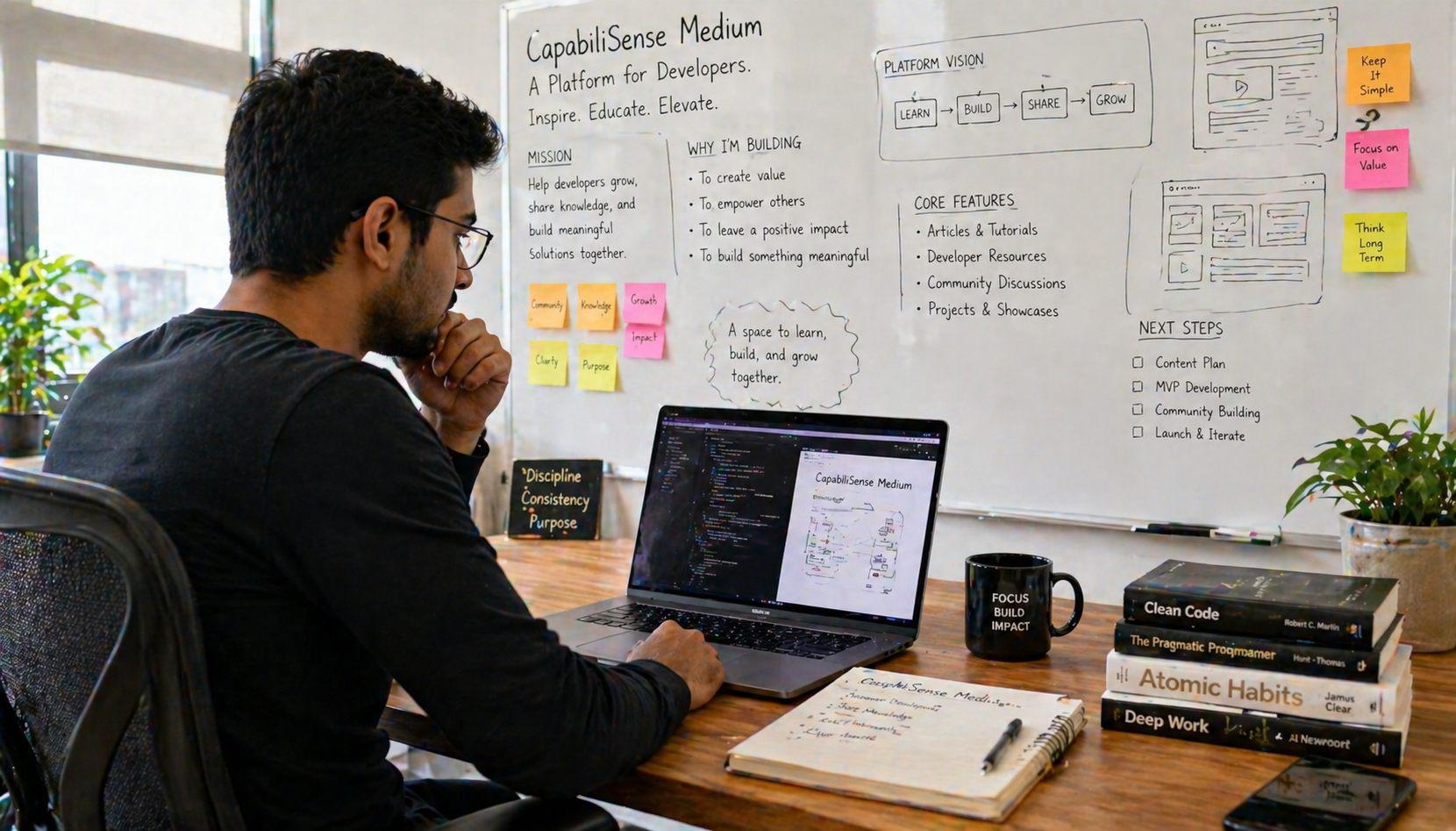
Every significant project begins with a problem that demands solving and a vision for creating something better than what currently exists. Understanding why I’m building CapabiliSense Medium requires exploring the gaps in existing solutions, the opportunities I’ve identified, and the potential impact this platform can create for users facing real challenges. This journey from concept to development reflects not just technical ambition but a genuine commitment to addressing needs that current tools and platforms fail to meet adequately.
The decision to build any new platform involves weighing the substantial investment of time, resources, and energy against the value it might create. For me, CapabiliSense Medium represents more than just another software project. It embodies a specific philosophy about how technology should serve users, what capabilities matter most in modern digital environments, and how platforms can evolve beyond simply replicating existing solutions with minor variations. This foundational thinking shapes every development decision and defines what makes this platform worth building.
The Problem That Inspired CapabiliSense Medium
Most innovation emerges from experiencing frustration with existing solutions and recognizing that better approaches are possible. Why I’m building CapabiliSense Medium starts with identifying specific shortcomings in how current platforms handle capability sensing and management. Traditional approaches often treat capabilities as static attributes rather than dynamic characteristics that evolve based on context, usage patterns, and changing requirements. This fundamental limitation prevents systems from adapting intelligently to user needs.
The gap between what users need and what existing platforms provide has widened as digital environments become more complex and interconnected. Users operate across multiple devices, platforms, and contexts, each with different capabilities and constraints. Current solutions struggle to sense these varying capabilities accurately and adjust functionality appropriately. This creates frustrating experiences where features work inconsistently or fail entirely because systems can’t properly detect and respond to environmental capabilities.
Another critical problem involves the fragmentation of capability information across disparate systems that don’t communicate effectively. Users encounter situations where one platform knows certain device capabilities while another platform remains ignorant, forcing manual configurations or accepting degraded experiences. This inefficiency wastes time and creates unnecessary friction in workflows that should operate seamlessly. Solving this fragmentation became a driving motivation behind the CapabiliSense Medium concept.
The Vision Behind Building CapabiliSense Medium
Clear vision distinguishes purposeful projects from aimless experimentation. Why I’m building CapabiliSense Medium centers on creating a platform that intelligently senses, interprets, and responds to capabilities across diverse environments and use cases. This vision extends beyond simple device detection to comprehensive understanding of what users can accomplish in their current context and how systems should adapt to maximize effectiveness and usability.
The platform aims to make capability awareness transparent and automatic rather than requiring constant user intervention. Instead of manually adjusting settings or accepting that certain features won’t work in particular situations, users should experience systems that simply work optimally given their current capabilities. This seamless adaptation represents the ultimate goal, where technology fades into the background by functioning so smoothly that users focus on their objectives rather than technical limitations.
Long-term vision includes establishing CapabiliSense Medium as a foundational capability layer that other platforms and applications can build upon. Rather than each developer solving capability sensing independently with varying success, a shared platform could provide consistent, reliable capability information that improves the entire ecosystem. This collaborative approach benefits everyone by raising baseline quality while allowing developers to focus on their unique value rather than reinventing infrastructure.
Core Principles Guiding CapabiliSense Development
Every development decision reflects underlying principles that define platform character and priorities. Why I’m building CapabiliSense Medium involves commitment to several core principles that shape how the platform operates and serves users. Understanding these principles helps explain design choices and development priorities that might otherwise seem arbitrary or unclear.
User-centricity forms the foundational principle, ensuring that every feature and capability serves genuine user needs rather than just technical possibilities. This means prioritizing functionality that solves real problems over impressive but impractical innovations. Development decisions are validated against actual use cases and user feedback rather than assumptions about what might be valuable. This discipline prevents feature bloat while ensuring the platform delivers practical value.
Privacy and data minimization represent another critical principle in an era of increasing concern about data collection and usage. CapabiliSense Medium aims to sense capabilities without collecting unnecessary personal information or creating privacy vulnerabilities. This requires thoughtful architecture that obtains needed information while respecting user privacy and maintaining transparency about what data the platform accesses and why.
Interoperability ensures the platform works across diverse technologies, standards, and environments rather than locking users into specific ecosystems. Open standards and broad compatibility expand the platform’s utility while preventing the vendor lock-in that frustrates users and stifles innovation. This openness requires additional development effort but creates superior long-term value for users and the broader technology community.
Technical Challenges in Building This Platform
Transforming vision into functional reality involves overcoming substantial technical challenges. Why I’m building CapabiliSense Medium despite these obstacles reflects confidence that solutions exist and the potential impact justifies the difficulty. Understanding these challenges provides insight into the platform’s complexity and the expertise required to execute the vision successfully.
Capability detection across heterogeneous environments presents the first major challenge. Different devices, browsers, operating systems, and network conditions create nearly infinite combinations of capability profiles. Building detection mechanisms that work reliably across this diversity requires extensive testing and sophisticated fallback strategies when primary detection methods fail. This technical complexity demands careful architecture and ongoing refinement as new technologies emerge.
Real-time capability monitoring adds another layer of difficulty, as capabilities change dynamically rather than remaining static. Network connectivity fluctuates, battery levels affect device performance, and user contexts shift rapidly. The platform must detect these changes quickly and trigger appropriate adaptations without creating jarring user experiences or consuming excessive resources. Balancing responsiveness with efficiency requires optimization at multiple levels.
Data synchronization and consistency across distributed systems create challenges familiar to anyone working with distributed computing. Ensuring that capability information remains current and consistent across multiple nodes while maintaining acceptable performance demands sophisticated synchronization strategies and conflict resolution mechanisms. These distributed systems challenges have well-established solutions, but implementing them correctly requires deep technical expertise and rigorous testing.
Why Medium Became Part of the Platform Strategy
Platform naming and positioning communicate important aspects of vision and strategy. Why I’m building CapabiliSense Medium with Medium as part of the platform identity reflects specific strategic thinking about market positioning, feature scope, and target audience. The Medium designation signals a balanced approach that avoids both oversimplification and overwhelming complexity.
Medium positioning indicates the platform serves intermediate complexity needs rather than targeting either basic use cases or enterprise-scale deployments exclusively. This sweet spot addresses the largest user population who need more than simple solutions provide but don’t require or want complexity designed for massive organizations. Focusing on this middle market creates opportunities to deliver high value without the overhead that enterprise platforms require.
The term also suggests balanced feature sets that provide substantial capability without attempting to solve every possible use case. This focused approach produces more refined, reliable functionality in core areas rather than superficial coverage of endless features. Users benefit from depth where it matters most rather than breadth that spreads development resources too thin to excel anywhere.
Additionally, Medium communicates approachability and accessibility. The platform aims to serve technical and non-technical users alike through interfaces and documentation that don’t require specialized expertise. This democratization of capability sensing technology expands the potential user base while making powerful functionality available to people who couldn’t leverage more complex alternatives.
The Development Journey and Learning Process

Building any significant platform involves continuous learning and adaptation as theory meets reality. Why I’m building CapabiliSense Medium includes embracing this learning process rather than expecting perfection from initial designs. The development journey provides valuable insights that shape not just the platform but also personal growth as a developer and product creator.
Early prototyping revealed assumptions that didn’t hold in practice, requiring pivots in approach and architecture. These course corrections, while sometimes frustrating, ultimately produce better solutions than rigidly adhering to initial plans despite contradictory evidence. Maintaining flexibility and willingness to revise decisions based on new information prevents investing heavily in approaches that won’t succeed.
User feedback from early testers provides invaluable guidance about what works intuitively and what confuses or frustrates people. This input often highlights gaps between developer assumptions and actual user mental models. Incorporating this feedback iteratively creates a platform that feels natural to users rather than requiring them to adapt to developer thinking. This user-centered refinement process continues throughout development and beyond initial release.
Technical challenges force deep learning about specific domains like browser APIs, network protocols, and distributed systems architecture. While sometimes requiring more time than anticipated, this learning produces expertise that benefits not just CapabiliSense Medium but future projects as well. The investment in understanding fundamentals pays dividends throughout a development career.
Addressing Real-World Use Cases with CapabiliSense
Abstract capabilities matter less than concrete problems solved and value delivered. Why I’m building CapabiliSense Medium ultimately comes down to enabling specific use cases that improve how people work and interact with technology. Understanding these practical applications helps clarify the platform’s purpose and potential impact.
Adaptive content delivery represents a primary use case where the platform determines optimal formats and quality levels based on current capabilities. A user on a slow mobile connection receives compressed, simplified content while someone on high-speed broadband gets full-resolution media and advanced features. This adaptation happens automatically without requiring manual settings adjustments, creating seamless experiences across varying conditions.
Cross-device workflow continuity benefits from capability awareness that helps systems understand what users can accomplish on their current device versus what requires switching to different hardware. The platform might recognize that certain tasks need larger screens or specific input methods, prompting appropriate suggestions rather than forcing users to struggle with unsuitable interfaces. This intelligent guidance enhances productivity while reducing frustration.
Accessibility improvements emerge from better understanding of user capabilities and limitations. The platform can detect assistive technologies and automatically configure interfaces for optimal accessibility rather than requiring users to navigate complex settings. This automatic adaptation makes technology more inclusive while reducing the burden on users who already face additional challenges in digital environments.
Building Community and Gathering Feedback
No platform succeeds in isolation from the users and communities it serves. Why I’m building CapabiliSense Medium includes commitment to fostering community participation and incorporating diverse perspectives into development. This collaborative approach produces better outcomes while building the engaged user base necessary for long-term success.
Early adopter programs provide structured opportunities for interested users to access developing features and provide feedback before general release. These participants gain early access to new capabilities while contributing insights that shape final implementations. This mutually beneficial arrangement accelerates development cycles while ensuring features meet real needs before consuming resources on full deployment.
Documentation and education efforts help users understand not just how to use the platform but why certain design decisions were made and how to maximize value. Transparent communication about development philosophy and technical approaches builds trust while helping users make informed decisions about whether the platform fits their needs. This educational focus distinguishes thoughtful projects from those that simply market features without context.
Open communication channels through forums, social media, and direct feedback mechanisms ensure that user voices reach development teams and influence priorities. This ongoing dialogue prevents the isolation that causes platforms to drift away from user needs toward developer preferences that may not align with actual requirements. Maintaining these connections requires dedicated effort but proves essential for building something truly valuable.
Measuring Success and Impact
Understanding whether CapabiliSense Medium achieves its goals requires defining success metrics beyond simple user counts. Why I’m building CapabiliSense Medium involves specific impact objectives that guide development priorities and help evaluate whether the platform delivers intended value. These success measures keep the project focused on meaningful outcomes rather than vanity metrics.
User experience improvements represent the most important success indicator, measured through reduced friction, fewer errors, and increased task completion rates in capability-sensitive scenarios. If users accomplish their objectives more easily and reliably with the platform than without it, the project succeeds regardless of other metrics. This user-centric definition of success ensures development efforts target genuine value creation.
Developer adoption and integration indicate whether the platform provides sufficient value for other creators to build upon it. Successful platforms become foundations for broader ecosystems where multiple parties contribute complementary capabilities. Tracking integration numbers and developer satisfaction provides insights into the platform’s utility beyond direct end-user experiences.
Technical performance metrics like accuracy of capability detection, response times, and resource efficiency ensure the platform operates reliably without creating new problems. Even valuable functionality becomes useless if it consumes excessive resources or produces unreliable results. Maintaining high technical standards proves essential for sustainable success that earns user trust over time.
The Road Ahead for CapabiliSense Medium
While current development represents significant progress, the vision extends far beyond initial releases. Why I’m building CapabiliSense Medium includes long-term thinking about how the platform evolves to address emerging needs and incorporate advancing technologies. This forward-looking perspective ensures the platform remains relevant as the technology landscape shifts.
Planned feature expansions address use cases beyond core capability sensing to related areas like preference management, context awareness, and predictive adaptation. These additions build on the foundational capability layer to create increasingly intelligent systems that anticipate user needs rather than just reacting to current conditions. This evolution transforms the platform from a detection tool into a comprehensive adaptation framework.
Partnership opportunities with complementary platforms and service providers could extend reach and utility beyond what independent development achieves. Strategic collaborations enable integration with established ecosystems while bringing capability awareness to users who might not discover the platform independently. These partnerships require careful evaluation to ensure alignment with core principles while expanding impact.
Continuous technological advancement in areas like machine learning, edge computing, and new web standards creates opportunities to enhance capability sensing accuracy and efficiency. Staying current with these developments ensures the platform leverages the best available technologies rather than becoming obsolete through reliance on outdated approaches. This commitment to evolution keeps the platform competitive and valuable long-term.
Frequently Asked Questions
What exactly is CapabiliSense Medium designed to do?
CapabiliSense Medium is a platform focused on intelligently sensing, interpreting, and responding to device and environmental capabilities across different contexts. It helps systems automatically detect what users can do in their current situation and adapt functionality accordingly, creating seamless experiences without manual configuration. The platform serves as a capability awareness layer that other applications can build upon to deliver more adaptive, user-friendly experiences.
Who is the target audience for this platform?
The platform serves both developers who want to integrate capability sensing into their applications and end users who benefit from more adaptive, context-aware software experiences. Developers gain reliable capability detection without building these complex systems themselves, while users experience software that works optimally across different devices and conditions. The Medium positioning targets intermediate complexity needs suitable for a broad range of use cases.
Why build a new platform instead of using existing solutions?
Existing solutions often handle capability detection as an afterthought rather than a core focus, resulting in inconsistent accuracy and limited scope. Many current approaches remain static rather than adapting to changing conditions, and fragmentation across different systems creates inefficiency. Building CapabiliSense Medium addresses these specific shortcomings through a platform dedicated exclusively to comprehensive, reliable capability sensing with modern architecture designed for dynamic environments.
How does this platform protect user privacy?
The platform follows data minimization principles, collecting only information necessary for capability detection while avoiding unnecessary personal data collection. Transparent policies communicate exactly what information the system accesses and why, giving users clear understanding of privacy implications. Architecture choices prioritize local processing where possible, reducing data transmission and centralized storage that could create privacy vulnerabilities.
When will CapabiliSense Medium be available for general use?
Development follows an iterative approach with early access available for interested testers and developers who want to provide feedback during refinement. General availability timing depends on completing core functionality testing and ensuring the platform meets reliability and performance standards. Updates about development progress and release timelines are shared through project communication channels, allowing interested parties to track progress and plan potential integration.
Conclusion
Understanding why I’m building CapabiliSense Medium reveals a project driven by genuine need rather than superficial novelty. The combination of identified gaps in existing solutions, clear vision for better approaches, and commitment to core principles creates a foundation for meaningful impact. While significant technical challenges remain, the potential to improve how people interact with technology across diverse contexts justifies the investment and effort required to execute this vision successfully.
The journey from concept to functional platform involves continuous learning, adaptation, and community engagement that shapes not just the software but also the development philosophy behind it. Success ultimately depends on delivering tangible value through improved user experiences, reliable capability detection, and a foundation that other developers can build upon confidently. As CapabiliSense Medium evolves from early development toward broader availability, the focus remains on solving real problems and creating technology that serves users effectively across the varied contexts and capabilities they encounter daily. This user-centered approach, combined with technical excellence and strategic positioning, defines what makes this platform worth building and positions it for meaningful long-term impact.